
7 Busiest Airports in Canada: What Travelers Should Know in 2026
Canada has some of the busiest airports in North America, whether you’re travelling domestically, connecting to the United States, or coming from abroad. Millions of travellers are connected annually by these transport hubs, which range from the massive Toronto Pearson International Airport to the picturesque Vancouver International Airport.
The top 5 busiest airports in Canada are listed in this blog along with important metrics and useful advice for travellers.

Toronto Pearson International Airport (YYZ) – Toronto, Ontario
Scale Is Both the Asset and the Challenge
Passenger traffic (2024): 43 million
Active Airlines: 46
Destinations covered: 147
Pearson’s biggest strength is that there is almost anywhere far away you would want to fly you can go from YYZ with one stop maximum. This comes at the expense that the airport operates at or over capacity most days. There are immigration and customs hold-ups on international arrivals through busy times in the summer and over the winter break over the late fall and during the Christmas season which take 45 min or longer even with the recently installed automated booths. The two terminals T1 and T3 are linked with automated terminal link train but visitors are often surprised to be at the wrong terminal at check in and have little margin for errors:
Overall, one biggest traveller frustration at the airport was not any single aspect but the overall time it took to make one’s way from landside to airside at peak times. Giving yourself two or three hours more than seemed reasonable to make your connection, for domestics and internationals respectively, just might not be overkill anymore.
Toronto Pearson International Airport, which is ranked among the top 30 in the world, is at the top of the list. It is the primary international entry point to the nation and is only 25 kilometres from downtown Toronto.
Major airlines like Air Canada and WestJet operate their hubs here, and Pearson is a true global link with two sizable terminals (T1 and T3) that cover a wide range of destinations across the globe. It is also a major hub for connecting flights throughout North America and the most popular point of entry for visitors arriving in Ontario.
Passenger tip: There are many food options, free Wi-Fi, and shopping options. Additionally, the UP Express train provides excellent access to Downtown.
Vancouver International Airport (YVR) – Vancouver, British Columbia
The Airport That Earns Its Own Reviews
Passenger traffic (2024): Over 25 million
Active Airlines: 31
Destinations covered: 75
YVR has a certain mystique for those who fly regularly; it has little to do with how busy the airport is. It consistently appears near the top of “best airport” lists for North America, a place it holds due to experience, not size. The terminal is a size that you can navigate intuitively, but big enough to provide real amenities and so unique-with the Indigenous art, the arrival section aquarium and the clearly visible mountain back-drop through the terminal; it acts as one of the first impressions of British Columbia to the millions of visitors traveling to our international terminal every year. With the Canada Line to downtown connected through the terminal, most visitors won’t even need to deal with a taxi or rideshare.
The second-busiest airport in Canada, Vancouver International Airport (YVR), is frequently listed as one of the top airports in North America. It is a popular tourist destination because of its glassy terminals, local art exhibits, and views of the surrounding mountains.
With several daily flights to Hong Kong, Tokyo, and Shanghai, YVR is primarily utilised as an international airport for flights to Asia, making it a significant hub for connections to the Asia-Pacific area. The SkyTrain (Canada Line) makes it easy to get to the airport, which is only 12 km from downtown Vancouver.
Passenger tip: Don’t miss the striking aquarium in the arrivals hall or the Indigenous art displays throughout the terminal.
Montréal–Trudeau International Airport (YUL) – Montréal, Quebec
Where Domestic and International Coexist Smoothly
Passenger traffic (2024): Around 21 million
Active Airlines: 31
Destinations covered: 93
YUL is in a peculiar spot amongst Canadian airports: It’s the only large Canadian airport where English and French are equally represented in practice-in signage and people. Many regulars who fly from Montreal to Europe find the international wing the most pleasant of the big Canadian hubs (of an easily manageable size, with cafes/restaurants that actually have “character” and unlike Pearson’s international departures lounge are not nearly as chaotic). While customs at arrival take less time for incoming internationals than at Pearson, it’s often an overlooked place to transit from Europe.
Montréal–Trudeau International Airport (YUL), which serves Canada’s second-largest city, is a major hub for travellers speaking English and French. The airport, which links Montréal to Europe, the United States, and other nearby regions of Canada, is only around 20 kilometres from the city centre.
The primary hub for Air Canada aircraft in Eastern Canada, YUL is renowned for its quick and easy customs procedures. It is now much more accessible and traveler-friendly thanks to recent improvements, such as enlarged international gates and better transit connections.
Passenger tip: Try the local café options — you’ll find amazing coffee and fresh croissants that are convenient quick bites.
Calgary International Airport (YYC) – Calgary, Alberta
The Smoothest Domestic Transfer in Canada
Passenger traffic (2024): Over 18 million
Active Airlines: 16
Destinations covered: 59
Within Canada’s largest airports, it always gets a positive rating from Canadian travellers for its efficiencies. Calgary avoids the confusion in and around Pearson’s multiple terminals first-time visitors find so disorienting. It flows in a manner that should allow most to easily go from arrivals to ground transport with just a single signage look. It’s a key jumping-off point for those bound for Banff, Canmore and the Canadian Rockies and a fairly large percentage of its international passengers come for leisure, meaning the passenger journey within the terminal flows towards visitor services and ease of navigation.
YYC Calgary International Airport, the biggest airport in Alberta and the fourth busiest in Canada, is situated roughly 17 km northeast of downtown Calgary. In 2024, YYC expanded its worldwide reach by adding five non-stop routes from Calgary: Keflavik (Iceland), Seoul, Charlotte, Tulum, and Deer Lake.
YYC is a significant international hub that offers nonstop service to more than 90 locations in Europe, Asia, and North and Central America. With free food, cocktails, and relaxation areas, frequent travellers often list the WestJet Elevation Lounge and Air Canada Maple Leaf Lounge at YYC as two of Canada’s greatest domestic lounges.
Passenger tip: Explore YYC’s impressive collection of over 200 public artworks, and take advantage of yoga rooms, walking paths, free Wi-Fi, and charging stations scattered around the airport.
Edmonton International Airport (YEG) – Edmonton, Alberta
Passenger traffic (2024): Over 8 million
Active Airlines: 16
Destinations covered: 38
Edmonton International Airport (YEG), which is roughly 30 kilometres from the city, completes the list. It is the biggest airport in Alberta and a major entry point to both international and northern Canada. YEG has a single, contemporary terminal with a variety of facilities, such as Belgian Beer Café, art exhibits, and local restaurants. Both business and leisure travellers find it to be a convenient option due to its well-known efficient layout, welcoming ambiance, and easy connectivity to regional centres.
Passenger Tip: For families, children’s indoor play zones are located by Gates 16, 66, and 80—ideal for burning some energy pre-flight.
John C. Munro Hamilton International Airport (YHM) – Hamilton, Ontario
Passenger traffic: Over 400k
Active Airlines: 5
Destinations covered: 6
Named after John Carr Munro, a longtime Member of Parliament for Hamilton East, Hamilton International Airport is a growing regional airport that serves as a convenient alternative to Toronto Pearson. The airport is known for its smaller size and ease of access, with it just being 20 minutes away from downtown. YHM offers a smoother travel experience compared to larger airports. Post the ongoing upgrade, the terminal will provide new check-in areas, baggage claim, updated departure gates, expanded exterior frontage, and particularly jet bridges (a first for the airport) to improve passenger convenience.
Passenger tip: The Canadian Warplane Heritage Museum is adjacent to the terminal; passengers with same day boarding passes may get free admission.
The Region of Waterloo International Airport (YKF) – Woolwich, Ontario
Passenger traffic: Over 550k
Active Airlines: 5
Destinations covered: 13
Situated in Woolwich Township, close to Kitchener, Cambridge and Waterloo, this airport is an emerging regional airport that connects Southwestern Ontario to destinations in Canada, the United States, and the Caribbean. The airport offers ease of access, shorter waiting times, and new infrastructure including a newly built departures lounge. Airlines including Flair, WestJet, Sunwing and Air Canada provide service from YKF to destinations including Calgary, Vancouver, Halifax, and leisure destinations including Cancun, Orlando, and Punta Cana. Located approximately a 45-minute drive from the Greater Toronto Area via Highway 401 and local roads.
Passenger tip: If you are travelling with pets, note that there are pet relief areas both outside the domestic arrivals building and inside past security (after repack tables).
How Canada's Airport Network Is Changing – Trends Shaping the Biggest Airports
You will never find any of Canadian airport looking like it’s last year. The recent uptick in air travel as the world recovers post COVID-19, along with investments in airport infrastructure and the expansion of air routes, is altering the landscape of key Canadian airports based on traveller type.
Pearson's Capacity Pressure and What It Means for Travellers
It feels like Toronto Pearson’s physical constraints are being pushed to their breaking point. As YYZ prepares to welcome 43 million travellers in 2024 and faces future growth beyond that, GTAA has been undertaking some serious terminal retrofits, expand their international gate network and have added to their ground transportation services. However, all the traveling public are now acutely aware is how crowded Pearson will still feel around the edges during peak hours despite all this-demand is simply outpacing any one capital initiative.
On the positive flip side this will also impact Ontario’s secondary airports: due to Pearson’s intensifying constraints, the traffic share that favours landing at Hamilton (YHM), Waterloo (YKF) and Billy Bishop (YTZ), all well-served in a reasonable drive range for part of the GTA’s population-will undoubtedly grow over the years. Although their route networks are less extensive than Pearson’s, they could represent more convenient and viable options than ever for both domestic flights and southern vacation-type travel.
Regional Airports and the Rise of Secondary Hub Travel in Canada
A readily apparent trend in Canadian aviation since 2022 has been that Canadian travellers, themselves, appear less inclined to simply head to the closest major airport by default: A consistent theme in surveys of Canadian air travellers has shown that, over just air fare, parking fee, airport congestion and journey time between doors has recently surpassed ticket cost in deciding on a domestic airport. For travellers able to get to YKF from downtown Kitchener in less than 20 minutes, the door-to-door trip via YKF may result in a shorter total travel than a 70 km drive to Pearson-along with parking, navigating Pearson’s Terminal 1, getting to their gate, etc. at a higher price on their ticket.
This trend should only be expected to accelerate given the GTAA’s approach to Pearson’s congestion and further increased frequencies offered by domestic regional carriers and travellers in Southern Ontario and elsewhere will be rewarded for checking what options YHM and YKF offer on any booking rather than treating them as afterthoughts.
Sustainability and Ground Transportation at Canada's Airports
Canada’s biggest airports are increasingly integrated into broader sustainable transportation The largest airports in Canada are becoming integrated into overall sustainable transportation discussions. YVR’s ‘transit-first’ ground access approach is often mentioned when comparing the potential rail infrastructure impact on major Canadian airports, with the Canada Line connecting a considerable number of their passengers through the air terminal and serving as the airport’s primary ground access mode. However, YYZ’s UP Express is only focused on connecting the city-to-core Toronto market, not on broadening car access away from airport environs and surrounding GTA residents.
As the largest in the GTA, with access on the periphery of an enormous, sprawling urban region, car travel continues to dominate Pearson access for the majority of its users-especially those traveling to the airport not from the Union Station transit sphere.
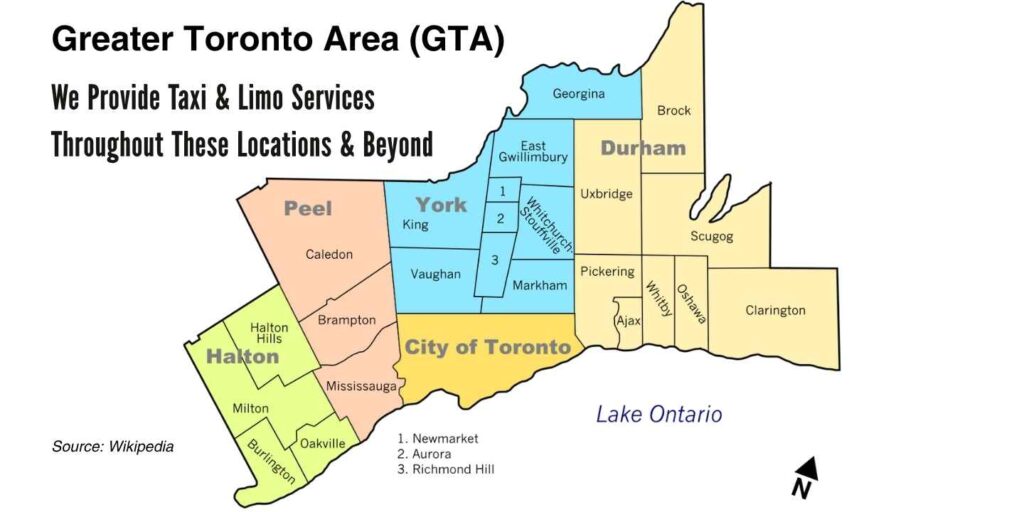
Toronto Taxi Limo provides 24 hour a day, 7 days a week, flat rate taxi and limousine service to and from Toronto Pearson Airport and other major GTA and Southern Ontario airports (e.g. Hamilton, Niagara, Peterborough and beyond).
Choose Route and Days
Choose a route, date and time of your trip!
Choose a Car and Extras
Choose a car and additional services!
Complete the Booking Form
Fill in a simple booking form and go!
CALL NOW TO RESERVE YOUR RIDE
Planning Around Airports in Canada: Tips That Actually Help
Most airport traveling tips are common sense. We are dealing with the ones Canadian travelers over at the busiest airports learn the hard way.
- Check a terminal in advance, every single time: airlines especially shift terminal locations sometimes in short notification for Pearson (YYZ). Sometimes a booking with T1 becomes T3 in the pre-departure notice given 3 days before. 20-minute search saves an other 20 minutes in inter-terminal travel!
- The ArriveCAN era is over, but the CBSA app is not: Canadian border pre-clearance, now on kiosk, on Pearson, Vancouver (YVR) and Calgary (YYC) means you can pass the inspection faster on arrival. Save yourself some minutes for border lines up!
- Pre-book ground transport for international arrivals, not just departures: Once you landed exhausted after hours of traveling you just want to sort yourself at the airport. Most likely to be the worst possible decision due to surge price Uber/Lyft drivers, long wait for a taxi and tired decision power. Avoid this by pre-booking a driver.
- Build genuine buffer into connecting itineraries at Pearson: The buffer on connecting at the Pearson should not be a ‘nice to have’ instead of ‘a must have’. For an international incoming flight to a domestic destination at YYZ, 2 hours should be the absolute, no way minimal connecting time (especially in summer and holiday breaks).
- YYZ Terminal 1 vs. Terminal 3 is not a small detail: YYZ T1 and T3 are two entirely separate buildings with dedicated driveways and taxi stands. Showing up to the wrong terminal at Pearson and needing to make an inter-terminal transit can turn a relaxing trip into an anxious one. It is one of the most avoidable transit issues.
- Regional airports reward flexibility: check Hamilton (YHM), Kitchener-Waterloo (YKF) or Billy Bishop (YTZ) before automatically booking with Pearson if any of those airports are within a driving distance. They will almost always be less busy and can provide you with a much smoother journey for domestic flights.
FAQs - Busiest Airports in Canada
There are a lot of options for transportation at the airport that include public transit, shuttle buses, taxi, rideshare and car rental. For more information check the related airport’s transportation page.
There are wheelchair services, accessible washrooms, priority screening lanes, and assistance for passengers with reduced mobility.
Each airport has its own lost and found office. You can check the related airport webpage for more information to locate your lost baggage or items.
It depends heavily on airlines, whether your tickets are through one carrier or codeshare, which terminals you arrive into/depart from, etc. It’s best to check with your airline and GTAA / Pearson’s guides.
U.S. Customs and Border Protection (CBP) pre-clearance is available at: Toronto Pearson (YYZ), Vancouver (YVR), Calgary (YYC), Edmonton (YEG), Montréal–Trudeau (YUL), Ottawa (YOW), Winnipeg (YWG) and Halifax (YHZ).
Initiatives like the Sunflower Lanyard for invisible disabilities, the MagnusCards® app and a Travel Rehearsal Program to practice airport procedures are set in place to assist travellers who are neurodivergent and sensory-sensitive.
Yes, luggage storage services are available for both short-term and long-term storage.
The airport offers multiple parking plans (short-term, long-term, airport south, cellphone waiting area, etc.). You can view the options and reserve parking through YVR’s “Book Parking” page.
Yes, the Montreal Airport Marriott In-Terminal Hotel is directly accessible from the terminal. Other nearby options include the DoubleTree by Hilton Montreal Airport and Aloft Montreal Airport, located in the Dorval and West Island area.
Yes, there is. YYC has a unique “Cellphone Lot” to make airport pick-ups quick and free. The Cellphone Lot is located on the right-hand side as you drive into the airport on the Airport Drive. Check out the map here.
JetSet Parking, Value Park, Easy Parkade, short-term, long-term, valet etc.
Mainly domestic (Calgary, Halifax, etc.), U.S. seasonal, Caribbean, and Europe via PLAY Airlines.
Yes, public transit is available. Grand River Transit provides regular bus service connecting the airport with Kitchener and Waterloo and Route 79 Breslau allows passengers to book trips up to two days in advance to nearby areas. For Cambridge, travellers can use a combination of bus routes, taxis or rideshare.
Conclusion - Busiest Airports in Canada
Whether you’re arriving at the lively Toronto Pearson Airport or enjoying the stunning Pacific views at Vancouver International, Canada’s airports are top-notch and always getting better.These hubs, which offer full amenities lounges and quick connections, are made to make your trip efficient, pleasant, and enjoyable.
Don’t forget to look up current flight information, airport facilities, and ways to travel from the airport to your destination if you’re planning a vacation soon. And reserve a ride with Pearson Airport Taxi & Toronto Limo Service if you’re flying into Canada from wherever and need a lift.
Toronto Taxi & Limo Services
Check out our most ordered taxi & limo services.