
Car Seat and Booster Seat Rules In Ontario
As one of the most crucial tasks a driver is entrusted with is passenger safety, a specific set of car seat and booster seat regulations mandated in Ontario and all of Canada are laid out for each and every vehicle. The rules are clear-whether you are a parent of a newborn who requires a car seat or a family hailing a cab in Toronto who needs to seat the little one correctly in either a taxi, rideshare, or private hire vehicle-understanding Ontario’s most current requirements could mean life for your child.
This guide details all four stages of child car seat usage, minimum requirements for child restraint systems in Ontario, booster seat regulations that are paramount to parents and children alike in the province, and best practices for ensuring your child is safe.
EXCELLENTTrustindex verifies that the original source of the review is Google. Friendly, timely, and super comfortable drive. Thank you!Posted onTrustindex verifies that the original source of the review is Google. Great experience with Pearson Airport Limousine & Taxi Service. The driver was punctual, professional, and the vehicle was clean and comfortable. Communication was smooth and everything went as planned. They also provide car seats for children, which made traveling with family much easier. Highly recommended!Posted onTrustindex verifies that the original source of the review is Google. Excellent communication prior to travel, meet and greet at the airport was well done and the driver Sumit Raman was excellent. Took really good care, allowed me to rest after a long flight and drove very safely. Highly recommend their services.Posted onTrustindex verifies that the original source of the review is Google. The driver was friendly and courteous.Posted onTrustindex verifies that the original source of the review is Google. Driver was great service was good.Posted onTrustindex verifies that the original source of the review is Google. Every time I've used this service my experience has been beyond reproach. I plan on using them every time I have a need to get from Kitchener to Toronto Pearson and back!Posted onTrustindex verifies that the original source of the review is Google. Visiting Toronto for a Women’s Conference, and had the best service for our group. We had two vehicles reserved and the communication with the company and our drivers was top notch. The fast and friendly service was exceptional.Posted onTrustindex verifies that the original source of the review is Google. Service was great
These are all the happy customers who have booked Toronto Taxi Limo’s services in the past through our online booking platform (added below), and left us with their kind words that has kept on motivating us to give the best service throughout the Greater Toronto Area, Hamilton Area, and other parts on Ontario, Canada.
Choose Route and Days
Choose a route, date and time of your trip!
Choose a Car and Extras
Choose a car and additional services!
Complete the Booking Form
Fill in a simple booking form and go!
CALL NOW TO RESERVE YOUR RIDE
Why Ontario Car Seat Regulations Exist?
The physical nature of children differs significantly from adults. Children’s bodies are characterized by their disproportionately large heads relative to their bodies, weak neck muscles, and a skeletal system that is not yet strong enough to handle the forces generated by a collision like that of an adult. An adult-sized seatbelt, when used in this context, can cause catastrophic internal injuries, particularly in a head-on collision, even at modest speeds.
Car seat laws in Ontario take into account the biological realities mentioned above. Each step in the life of a car seat, from rear-facing baby seats to booster seats and seatbelts alone, is formulated around ensuring that a child’s growing body is supported by an appropriate restraint. Skipping one of the stages too soon or choosing an inappropriate restraint puts a child in threat.
The 4 Stages of Child Car Seat Use in Ontario
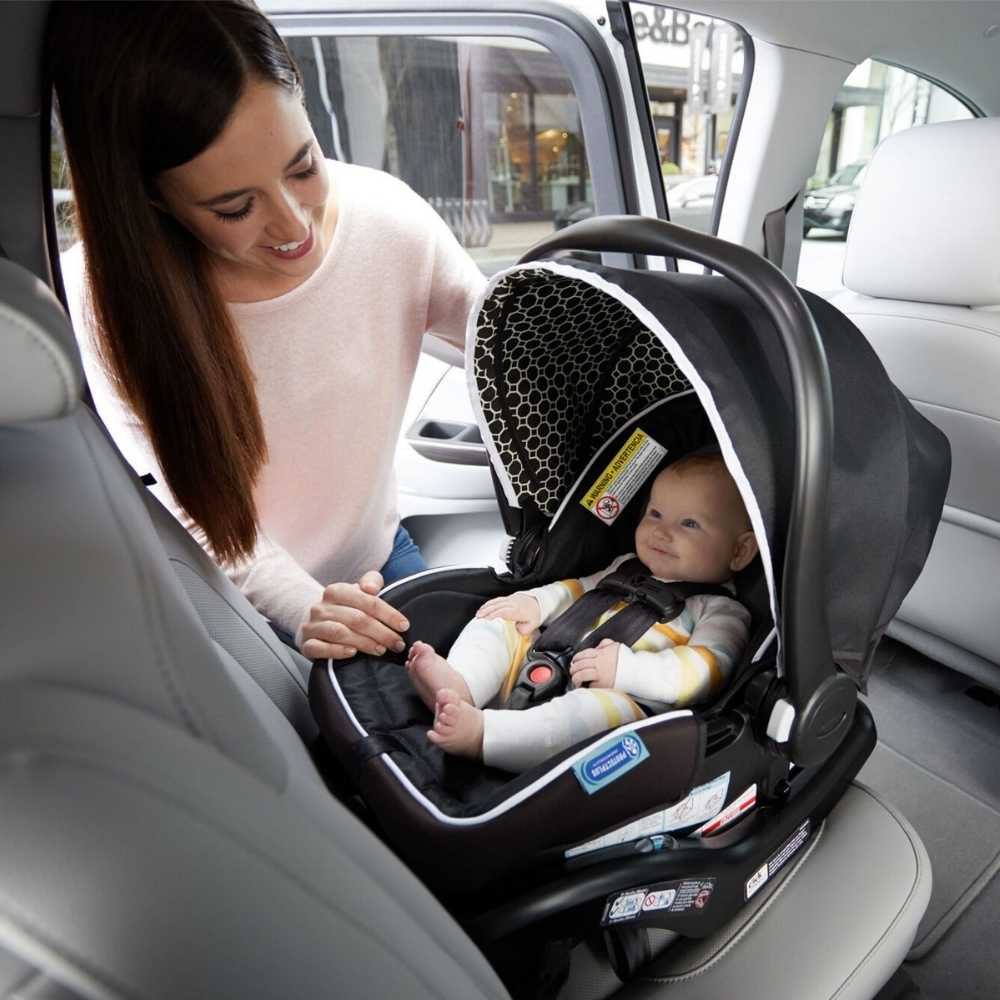
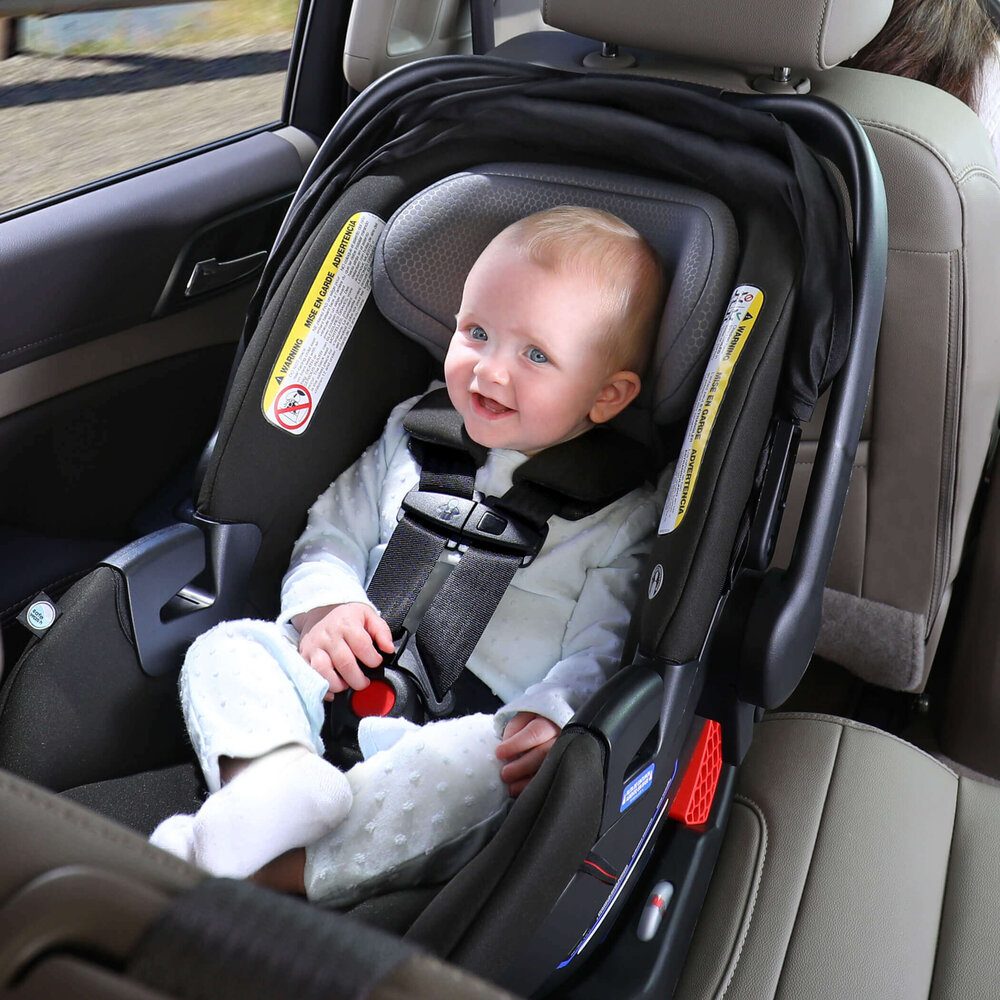
Stage 1 – Rear-facing car seats (for infants and small children)
All infants are required to be secured in a rear-facing car seat by law in Ontario. During a frontal collision-the most dangerous form of accident-the head, neck and spine of an infant riding backward are securely cradled by the seat, the entire back is thus supported, distributing the impact of a collision across the body, rather than applying immense pressure to a small portion of the body’s structure (neck).
Canada’s legal standards (federal baby car seat rules) dictates that children must not face forward until the appropriate height and weight limit of the car seat being used has been surpassed by the child, and it is heavily advised by the laws of Ontario to keep infants rear-facing for as long as the seat allows, even past their first year, if at all possible. There is no such thing as being in a rear-facing seat for too long when the guidelines indicate otherwise.
Stage 2 – Forward-Facing Car Seat with Harness (Toddlers)
A child has “outgrown” their rear-facing seat when they have exceeded the height or weight capacity set forth by the manufacturer. At this point, a forward-facing car seat that utilizes a five-point harness is deemed appropriate for use, for which transport Canada recommends a child should be at least 10 kg (22 lbs) of body weight before using.
A five-point harness works by attaching points at the chest (2), waist (2) and between the legs (1) and distributing crash forces across five broad points of a child’s body. Parents too often rush the transitioning stages. The requirement for use of a forward-facing seat with a harness should only cease when a child physically outgrows their harness car seat, not based on age.
Stage 3 – Booster Seat (Older Children)
Children are required by the rules for booster seats in Ontario to use them once they’ve outgrown the harness system in their forward-facing seat, which requires a child to be at least 18 kg (40 lbs) according to transport Canada.
A child must use a booster seat until at least the age of eight and have reached a height that satisfies a minimum booster seat use criteria in Ontario-generally interpreted as having their vehicle’s seatbelt fit properly without the use of a booster. A well-fitting seatbelt should lie flat across the collarbone and chest of a child (not across their neck) and rest securely across the thighs, not the abdomen, for use.
Stage 4 – Seatbelt Only
Children are ready for a standard seatbelt on its own when they have outgrown their booster seats completely and are at least eight years old (but may be as old as twelve, dependent on the individual child’s size) and the vehicle’s seatbelt rests securely across their collarbone/chest and lap/thigh without being positioned poorly or without riding up the child’s abdomen. Size, not just age, plays an important role in a child’s ability to use a seatbelt safely without a booster seat, and children who cannot correctly wear their seatbelt still require a booster.
Ontario Car Seat Rules at a Glance
| Stage | Seat Type | Minimum Weight | When to Move on |
|---|---|---|---|
|
1 |
Rear-facing Seat |
Any weight (newborn+) |
When seat’s max height/weight is reached |
|
2 |
Forward-facing with harness |
At least 10 kg (22 lbs) |
When seat’s max height/weight is reached |
|
3 |
Booster Seat |
At least 18 kg (40 lbs) |
When seatbelt fits correctly without booster |
|
4 |
Seatbelt only |
Child dependant |
N/A – final stage |
Source: Transport Canada and City of Toronto Car Seat Safety guidelines. Always consult your seat’s manufacturer manual for model-specific limits.
New Rules Toronto Parents Should Note
The new guidelines for car seat and booster seats in Ontario and Toronto are centered around one critical aspect: children must remain at each stage of safety as long as it’s appropriate, until they physically outgrow their current car seat or booster seat. The Highway Traffic Act of Ontario dictates that a suitable child restraint system must be used for any child who is too small or too young to use a seatbelt by itself.
Several important points to consider when it comes to child car seat rules:
- Car seats are issued with an expiry date, generally 6 to 10 years from the date it was manufactured, and can be found on the sticker on its base.
- Any car seat that has been involved in a crash, regardless of the speed, must be discarded, even if it does not appear to be damaged.
- Be wary of used or online purchased car seats. There’s no guarantee that they comply with Canadian safety standards. Always look for the National Safety Mark.
- Under no circumstances should a car seat be used in a vehicle that is not designed to hold it, and no child carrier that does not specifically include adapter kits is suitable for strollers.
Car Seat Rules in Taxis and Rideshares in Toronto
One of the biggest questions that Toronto families ask us is whether they need to use a car seat when taking a taxi. The answer is YES! Car seat rules in Ontario apply to all vehicles, including taxis and private hire vehicles. Just because you’re in a taxi doesn’t mean that your child doesn’t need a car seat properly installed and fitting their age and size.
Toronto Taxi Limo now has a specially equipped taxi that is equipped with child car seats so you do not need to provide one if you request their rear facing, forward facing, or booster seat fitting taxi service. They suggest pre-booking, since “curb-side” taxis are rarely equipped with restraints. Be sure to specify the age and weight of your child and how it relates to their stage of using their child seat; your taxi will arrive with the right one!
So, the next time you want to head to the airport or anywhere in Toronto or GTA, just avail our Toronto taxi service with child car seat and we will be there with the right kind of seat for your loved one.
FAQs - Car Seat and Booster Seat Rules In Ontario
Ontario’s laws don’t state a minimum height.
Though it is not recommended; the car seat must have the national safety mark to comply with Canadian law.
Yes, all Ontario child car seat rules, including the rear-facing, are applicable to all vehicles including taxis.
Under child seat regulations that Ontario upholds, your child must use their booster seat at least until they turn eight, and only if the seat belt no longer fits across their collarbone and thighs. Whichever of these occurs last is when you can ditch the booster.
The age of your car seat will be printed on a sticker on the base or underside.
The Bottom Line
The rules are there for one thing, the safety and well-being of the child at all times, and to protect them in the event of an accident. The four stages are put in place based on age of growth, not some arbitrary date. Children need to be at each stage for as long as their particular car seat allows and not rush.
Bookings for a child with their parent with Toronto Taxi Limo would be pre-arranged to obtain the best possible and legal safety for your child in both the rear-facing infant seat and forward-facing car seat stages or booster stage.
Check our other content on Child Car Seat